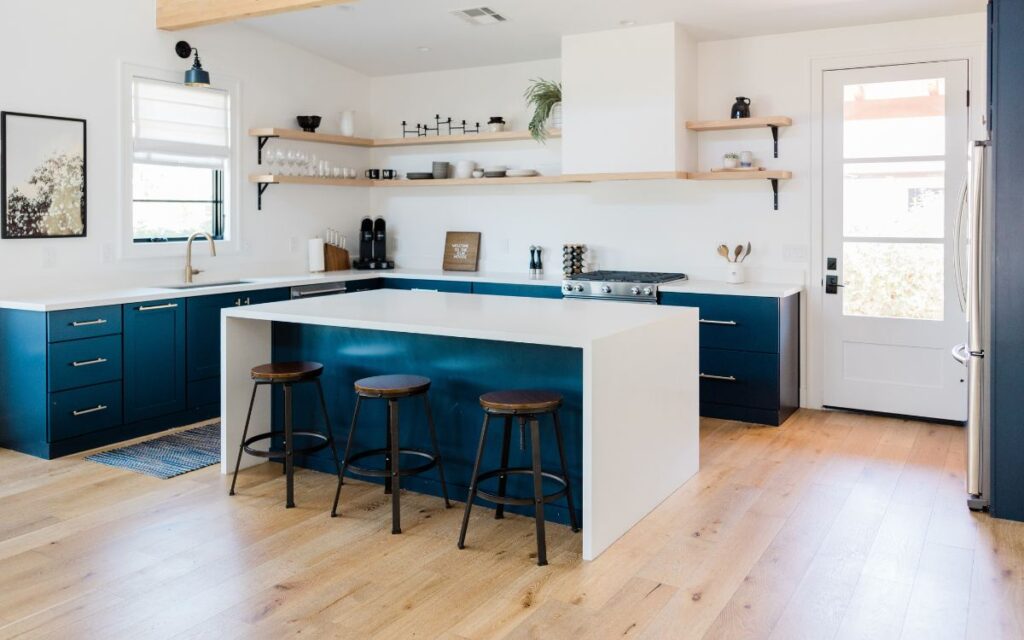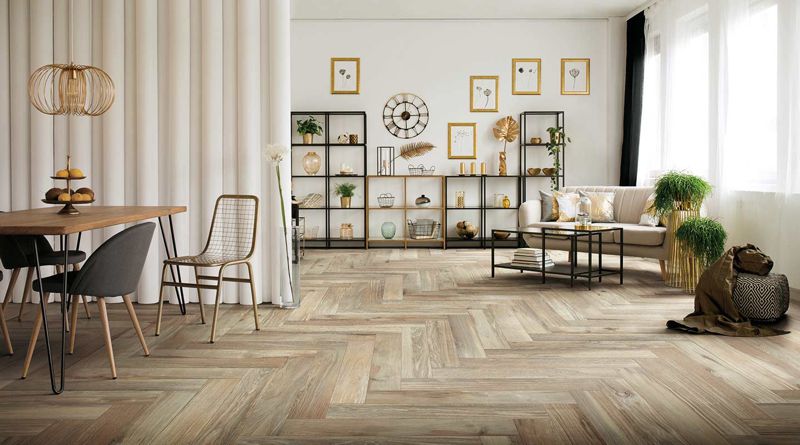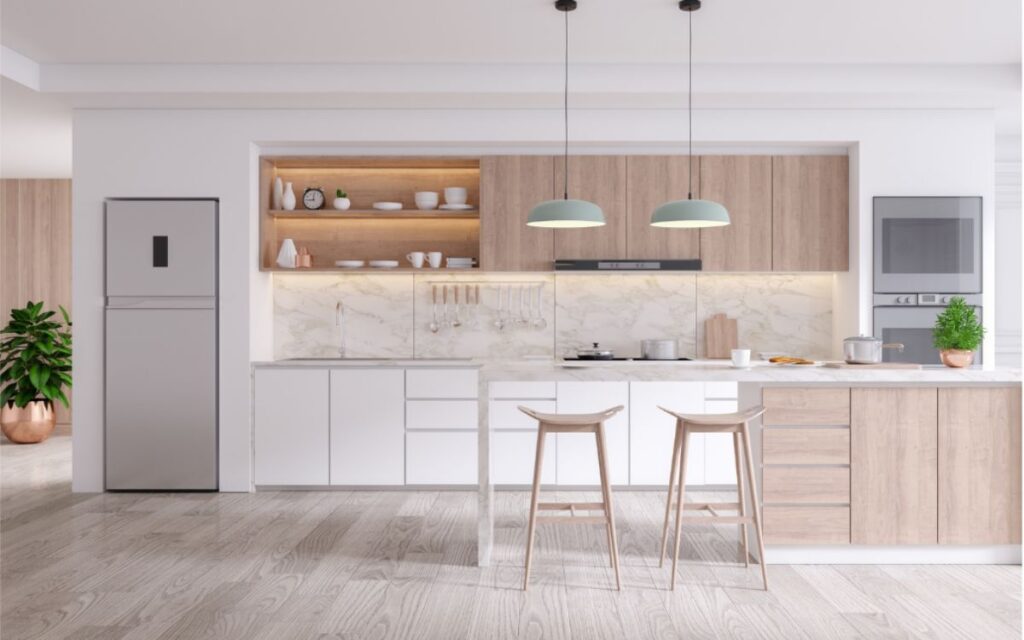
Designing a contemporary home is about more than just creating a stylish space — it’s about harmonizing form and function, innovation and comfort, simplicity and sophistication. Contemporary design evolves constantly, reflecting current aesthetics, technologies, and lifestyles. It celebrates openness, clean lines, and a connection between the indoors and outdoors while embracing sustainability and personalization. This guide explores how to design a contemporary home from architectural principles to interior details, offering practical advice and creative inspiration.
Understanding contemporary design
Before starting the design process, it’s important to understand what “contemporary” truly means. Unlike modern design, which refers to a specific historical period (mid-20th century), contemporary design represents what’s current — the trends, technologies, and ideas of the present. It borrows elements from various styles, including minimalism, industrial, Scandinavian, and sustainable architecture.
Key characteristics of contemporary design include:
- Simplicity and clarity: Clean lines, uncluttered spaces, and a restrained color palette.
- Open floor plans: Spaces flow seamlessly into one another, fostering a sense of continuity.
- Natural light and connection to nature: Large windows, glass walls, and indoor-outdoor integration.
- Sustainable materials and technologies: Eco-friendly solutions are central to contemporary design.
- Flexibility: Spaces adapt to different needs and lifestyles.
In essence, a contemporary home feels fresh, functional, and connected to its environment — both aesthetically and ethically.
Architectural foundations
The architecture of a contemporary home defines its character. The structure should emphasize geometric clarity, open spaces, and the creative use of materials. Flat or low-pitched roofs, cantilevered sections, and asymmetrical facades are common architectural traits.
Layout and space planning
The floor plan of a contemporary home favors open concepts. Walls are minimized to encourage interaction and fluidity between rooms. The kitchen often merges with the living and dining areas, forming a central hub for socializing. Bedrooms and private zones are strategically separated for tranquility and privacy.
Some key principles include:
- Use zoning to define functions rather than physical barriers.
- Prioritize natural light through skylights, clerestory windows, and glass doors.
- Ensure flexibility, allowing spaces to serve multiple purposes.
Materials and structure
Contemporary architecture often mixes traditional and industrial materials for contrast and texture.
| Material | Typical Use | Aesthetic Effect |
|---|---|---|
| Concrete | Structural walls, floors | Raw, solid, minimalist |
| Glass | Facades, partitions | Transparency and light |
| Steel | Frames, railings | Industrial precision |
| Wood | Floors, ceilings, cladding | Warmth and natural tone |
| Stone | Feature walls, landscaping | Earthy solidity |
Blending these materials thoughtfully creates balance between warmth and coolness, rigidity and softness — the essence of a well-designed contemporary home.
Lighting in a contemporary home: the architecture of atmosphere
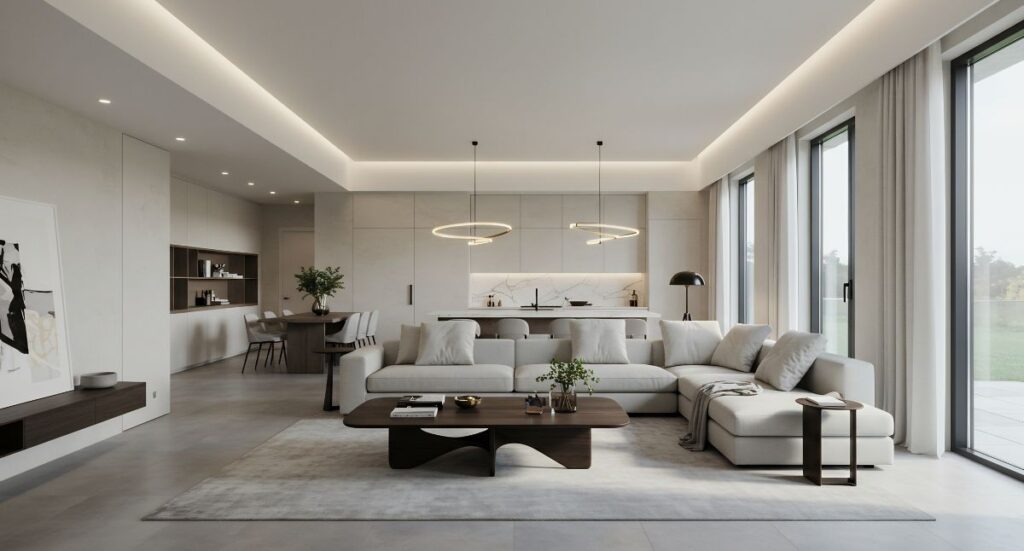
Lighting in contemporary design is more than a necessity; it shapes mood, enhances architecture, and highlights textures. Natural light is a primary focus, achieved through expansive glazing, open courtyards, and light wells. Artificial lighting should complement daylight, layering ambient, task, and accent illumination.
Lighting strategies include:
- Recessed lighting for clean ceilings and unobtrusive illumination.
- LED strips integrated into architectural lines for a futuristic effect.
- Pendant and floor lamps that double as sculptural pieces.
- Smart lighting systems allowing dynamic control of intensity and color temperature.
Properly planned lighting transitions a space from day to night while maintaining comfort and visual interest.
The role of color and texture in a contemporary home
Color in contemporary homes tends to be neutral — whites, greys, taupes, and blacks dominate. However, these subdued backgrounds create the perfect canvas for bold accents and textures. Pops of color can appear in furniture, artwork, or decorative objects.
Guidelines for using color:
- Start with a neutral base to ensure longevity and versatility.
- Introduce accent tones (navy, forest green, terracotta) through smaller elements.
- Use contrast strategically to define architectural features or focal points.
Texture plays a vital role in preventing monotony. Combine materials with different tactile qualities — smooth marble, rough concrete, matte paint, and soft textiles — to create depth and sensory richness.
Contemporary home: furniture and layout
The furniture in a contemporary home should emphasize function, comfort, and understated elegance. The goal is to furnish the space without overwhelming it.
Key principles for furnishing:
- Low-profile furniture with clean lines enhances openness.
- Modular pieces adapt to different configurations.
- Minimal ornamentation keeps the focus on form and material.
- Natural or synthetic fabrics in neutral shades maintain visual harmony.
When arranging furniture, prioritize flow and proportion. Avoid cluttering — every piece should have a purpose and space to breathe. The furniture layout should promote both social interaction and relaxation.
Integrating technology seamlessly
Contemporary design embraces innovation. Smart home technologies — once luxuries — are now integral to comfort and efficiency. The challenge lies in incorporating technology without compromising aesthetics.
Modern systems may include:
- Automated climate and lighting control for energy efficiency.
- Hidden sound systems for immersive audio experiences.
- Smart glass that adjusts opacity for privacy and solar control.
- Integrated home security systems managed from a mobile device.
Technology should feel invisible yet omnipresent — enhancing the home’s livability while maintaining clean visual lines.
Sustainable design and energy efficiency
A defining aspect of contemporary homes is environmental consciousness. Designing sustainably means optimizing resources, reducing waste, and considering long-term environmental impact.
Sustainability strategies:
- Passive design: Orienting the home to maximize natural light and ventilation.
- High-performance insulation to minimize energy loss.
- Renewable energy systems, such as solar panels or geothermal heating.
- Rainwater harvesting and greywater recycling.
- Eco-friendly materials, like reclaimed wood or recycled concrete.
These choices not only reduce environmental footprint but also lower maintenance costs and enhance comfort.
Indoor-Outdoor connection
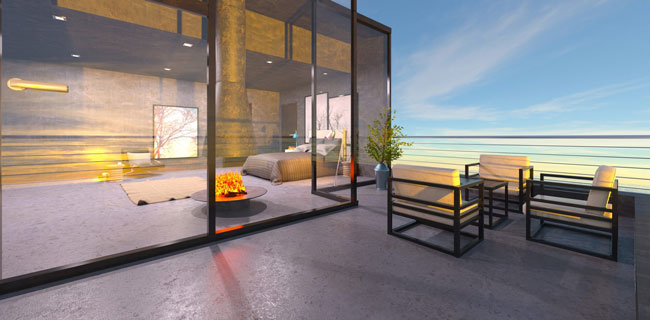
Contemporary homes blur the boundary between inside and outside. The landscape becomes an extension of the living space. Floor-to-ceiling windows, sliding glass doors, and continuous flooring materials strengthen this connection.
Elements that enhance the indoor-outdoor relationship:
- Covered patios or decks for year-round usability.
- Indoor courtyards introducing natural light and air.
- Water features and vertical gardens for tranquility.
- Outdoor kitchens and lounges mirroring interior comfort.
The goal is to create a holistic environment where architecture and nature coexist harmoniously.
Art and personal expression
Though contemporary design favors minimalism, it doesn’t mean a lack of personality. Art, sculptures, and curated objects inject character and tell the homeowner’s story.
Tips for integrating art:
- Choose large statement pieces rather than many small ones.
- Position artwork against neutral backdrops for maximum impact.
- Incorporate sculptural lighting or installations that merge art and function.
- Rotate artworks seasonally to refresh the ambiance.
Art adds warmth, emotion, and individuality — transforming a house into a home.
Contemporary home: creating a cohesive experience
Ultimately, the success of a contemporary home lies in coherence. Each element — from architectural structure to furniture and lighting — should align with the overall vision. Avoid mixing too many styles or decorative trends; instead, prioritize balance, proportion, and clarity.
Checklist for a cohesive contemporary design:
- Consistent material palette throughout interior and exterior.
- Seamless transitions between spaces.
- Visual rhythm through repetition of lines, shapes, or colors.
- Functional design that supports daily life.
Harmony in design produces a sense of calm and timeless elegance.
Designing a contemporary home: common mistakes to avoid
Even experienced designers can fall into traps when working with contemporary style. Awareness of these pitfalls ensures a more refined result.
Frequent errors include:
- Overusing industrial materials, creating a cold or sterile environment.
- Neglecting acoustics in large open spaces.
- Ignoring proportion — oversized furniture can disrupt balance.
- Prioritizing aesthetics over comfort.
- Mixing too many color temperatures in lighting.
Striking the right balance between visual appeal and livability is the essence of good design.
The future of contemporary living
As technology and lifestyles evolve, so does contemporary design. Future homes will likely emphasize adaptability, wellness, and deeper integration with nature. We can expect:
- Smart materials that respond to environmental changes.
- Biophilic design bringing natural systems indoors.
- Modular architecture allowing homes to evolve with family needs.
- Carbon-neutral construction using advanced sustainable techniques.
Contemporary design will continue to be fluid — an ever-changing dialogue between human creativity and technological progress.
Conclusion
Designing a contemporary home is both an art and a science. It demands sensitivity to proportion, light, and materials, as well as an understanding of sustainability and technology. The ultimate goal is to craft spaces that feel fresh, functional, and emotionally resonant — homes that reflect today’s way of living while remaining timeless.
A well-designed contemporary home tells a story of innovation, restraint, and connection — to the environment, to modern life, and to the people who inhabit it.